The best guide to sourcing from China in 2026: Everything You Need to Know About China Sourcing Agents, Costs, and Strategies
Sourcing products from China remains one of the most profitable strategies for businesses worldwide in 2026. From Amazon sellers and Shopify store owners to traditional importers, millions rely on Chinese manufacturers for competitive pricing, vast variety, and scalable production. Whether you’re a beginner or scaling up, understanding how to navigate this massive market is essential.
A China sourcing agent can make or break your import journey. Many new importers search for “sourcing agent China cost” or “sourcing agent China commission rate” because they want transparency before committing. This comprehensive 1200-word guide covers the benefits, challenges, real costs, step-by-step process, and expert tips to source successfully from China this year.
What is Sourcing?
Sourcing is the process of finding, evaluating, and acquiring products or materials from suppliers so you can resell them for profit. In simple terms, it means locating reliable manufacturers or wholesalers who can supply the exact goods you need at the right price, quality, and quantity.
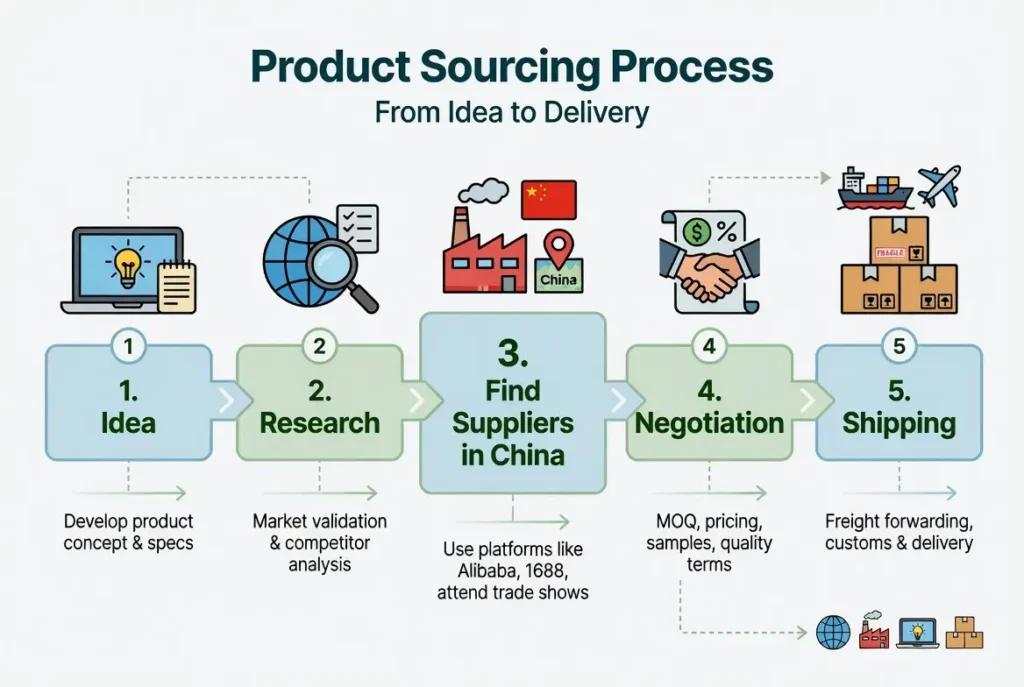
For online sellers, Amazon FBA owners, or Shopify store operators, product sourcing usually involves:
- Researching popular products with good profit margins
- Identifying trustworthy suppliers
- Negotiating prices and terms
- Checking product quality
- Arranging production, inspection, and shipping
When people talk about sourcing from China, they mean finding suppliers in China (the world’s largest manufacturing hub) to buy products at very competitive prices. This can be done directly through platforms like Alibaba or with the help of a China sourcing agent who handles the heavy lifting on your behalf.
Sourcing is one of the most important steps in building an e-commerce or import business. Done well, it helps you get high-quality products at low costs, giving you healthy profit margins. Done poorly, it can lead to bad quality, delays, or lost money.
Many beginners start with small test orders to learn the process before scaling up.
Why Source Products from China in 2026?
China continues to dominate global manufacturing. It offers unmatched scale, advanced supply chains, and cost efficiencies that domestic or near-shore alternatives simply can’t match for most consumer goods, electronics, apparel, home goods, and machinery.
Key advantages include the following:
- Lower production costs: Factories benefit from established ecosystems in cities like Yiwu, Shenzhen, Guangzhou, and Ningbo.
- Customization and private labeling: Easy to create your own brand with low minimum order quantities (MOQs) compared to a decade ago.
- Speed and variety: Over 1 million suppliers across thousands of product categories.
- E-commerce readiness: Many suppliers understand Amazon FBA, Shopify, and dropshipping requirements.
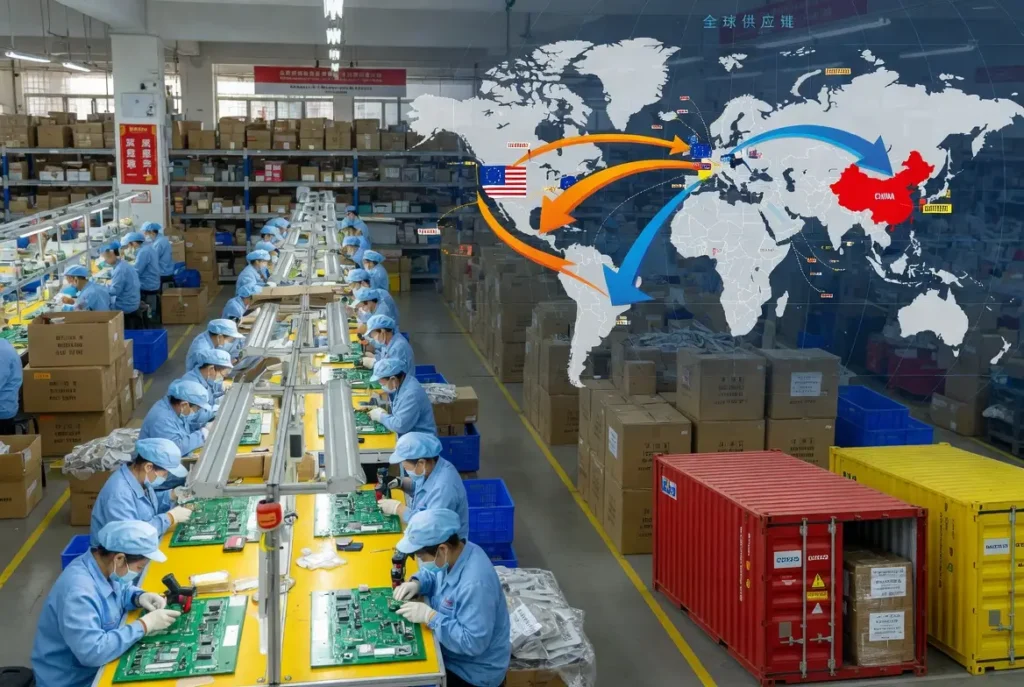
However, success isn’t automatic. Language barriers, quality inconsistencies, and logistics complexities can turn a great deal into a costly mistake. This is exactly why professional China sourcing agents have become indispensable for many importers.
Common Challenges When Sourcing Directly from China
Going direct via platforms sounds simple until it isn’t. First-timers often face:
- Communication gaps (even with Google Translate).
- Supplier verification issues (many “factories” on Alibaba are actually trading companies).
- Quality control problems leading to defective shipments.
- High MOQs that don’t suit small businesses.
- Hidden fees in shipping, tariffs, and customs.
Geopolitical factors and fluctuating tariffs add another layer. In 2026, smart importers focus on diversification, strong supplier relationships, and third-party inspections.
Direct Sourcing vs. Hiring a China Sourcing Agent
Direct sourcing works if you have time, Mandarin skills, and experience visiting factories. You save on agent fees but risk higher overall costs from mistakes.
Hiring a China sourcing agent (also called a Chinese sourcing agent or buying agent) changes the game. These professionals act as your on-the-ground team. They:
- Source and vet suppliers.
- Negotiate prices (often 10-30% lower).
- Handle sampling and quality inspections.
- Manage payments, consolidation, and shipping.
- Provide cultural and language expertise.
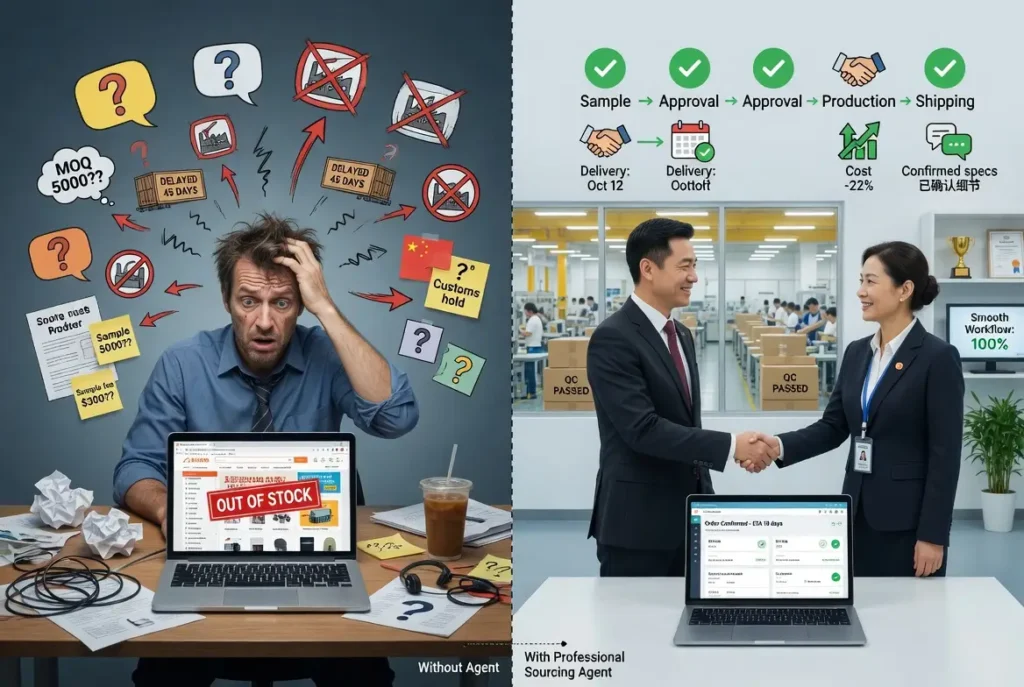
Most agents are based in key hubs like Yiwu (for small commodities) or Shenzhen (for electronics). For beginners or businesses without a China presence, a reliable sourcing agent in China is often worth every penny.
Sourcing Agent China: Cost and Commission Rates Explained
This is the question everyone asks: “How much does a china sourcing agent charge?”
In 2026, the industry standard is transparent and tiered by order value (FOB price). Most professional agents use one of three models:
- Percentage Commission (most common): 3–10% of total order value.
- Orders under $10,000 → 8–10%
- Orders $10,000–$50,000 → 5–8%
- Orders over $100,000 → 3–5% Example: A $20,000 order at 6% commission costs $1,200. The agent earns this for full-service work (sourcing + QC + logistics coordination).
- Flat Fee: $300–$2,000 per project. Best for one-off or very small orders.
- Hybrid: Small base fee + lower commission + performance bonuses.
Important: Legitimate agents show you the factory invoice separately. Avoid anyone who hides supplier prices or adds undisclosed markups (a common scam). Always ask: “Will I see the real factory price?”
Extra costs to budget for:
- Product samples + shipping ($50–$300).
- Third-party quality inspections ($200–$500 per shipment).
- Tooling/mold fees (if custom).
Transparent China sourcing agent fees actually save money long-term by preventing defective goods and overpaying.
Step-by-Step Guide to Sourcing from China
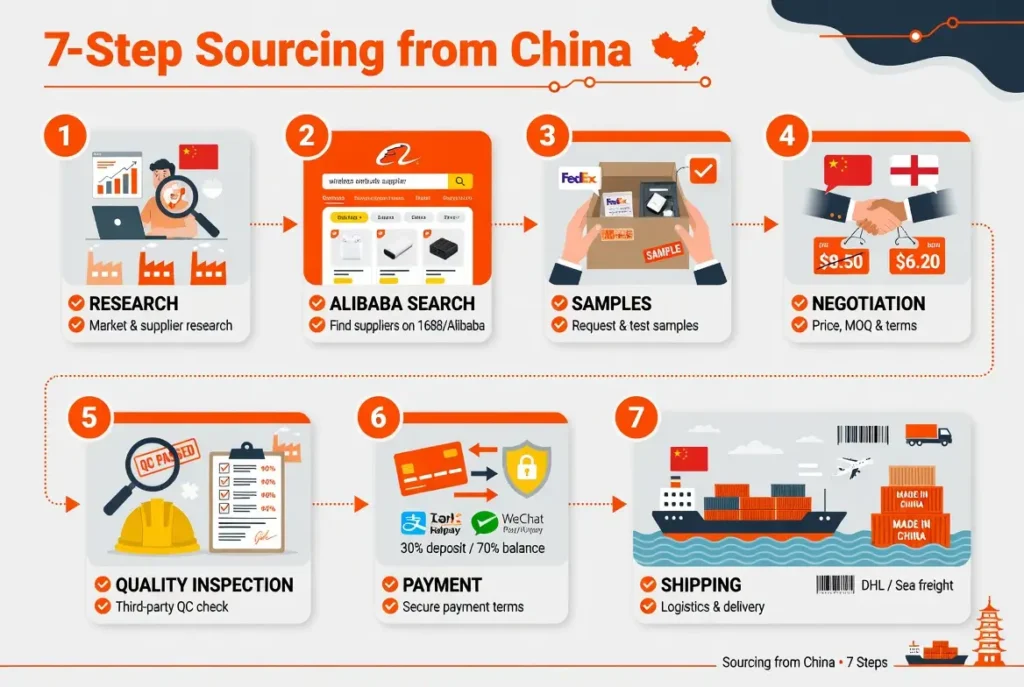
Follow this proven process whether you use an agent or go direct:
- Product Research & Validation: Confirm demand, margins (aim for 3–5x landed cost), and regulations in your market.
- Supplier Discovery: Start on Alibaba for English ease, then cross-check on 1688.com for lower factory prices (requires an agent or translator).
- Request Quotes & Samples: Get 5–10 quotes. Order samples from shortlisted suppliers.
- Negotiation: Discuss price, MOQ, payment terms (30% deposit, 70% before shipment), and customization.
- Quality Control: Use a third-party inspector (or your agent) for pre-shipment checks.
- Payment & Production: Use secure methods like Trade Assurance or escrow.
- Shipping & Logistics: Choose sea freight for bulk (2026 rates: $2,700–$3,400 for 40′ HQ to US West Coast) or air for urgency.
- Customs & Delivery: Work with a freight forwarder familiar with your country’s duties.
Best Platforms for Sourcing from China in 2026
- Alibaba.com: Still the #1 choice for beginners. English interface, Trade Assurance protection, and verified suppliers. Great for international buyers.
- 1688.com: Domestic Chinese platform with 15–30% lower prices and smaller MOQs. Best used with a china sourcing agent who handles language, payment, and consolidation.
- Made-in-China, Global Sources: Good alternatives for specific niches.
- Physical Markets: Yiwu for small goods, Guangzhou for fashion/electronics, Canton Fair (twice yearly) for in-person deals.
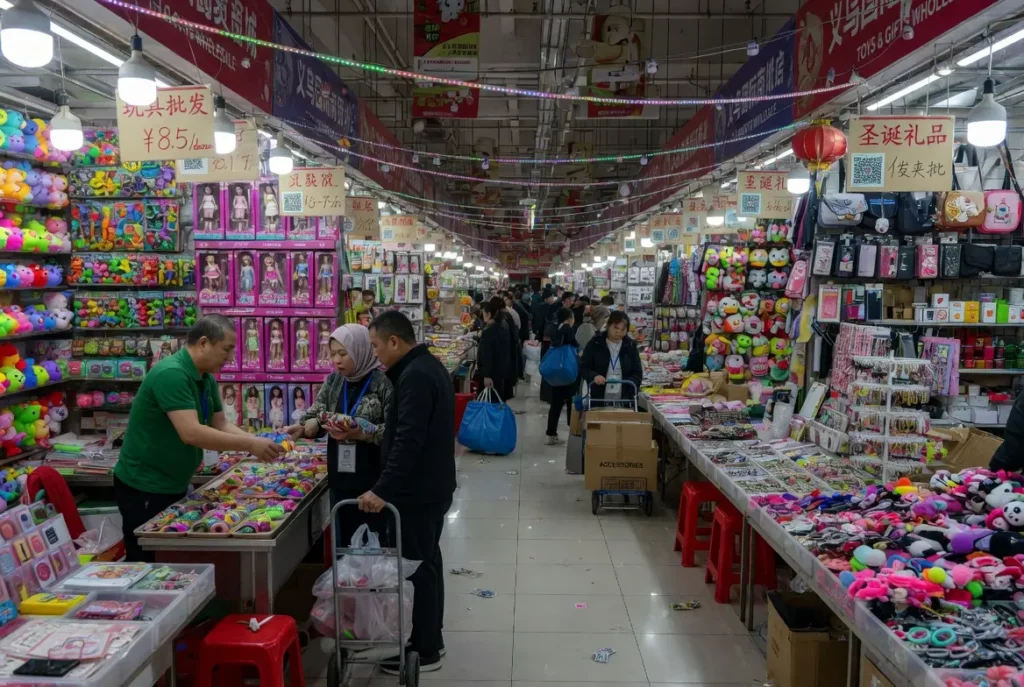
Pro tip: Use Alibaba to compare, then move conversations to WeChat for better pricing.
Quality Control, Inspection, and Logistics Tips
Never skip inspection. A $300 inspection can save thousands in returns. Focus on:
- Factory audits.
- Pre-shipment random sampling.
- Compliance testing (CE, FCC, RoHS, etc.).
Logistics in 2026 remain stable but book early during peak seasons (September–November). Consider consolidated shipping if ordering multiple products.
Pro Tips for Success & Avoiding Scams
- Start small: Test with a $2,000–$5,000 order.
- Verify suppliers: Ask for business license, factory photos/videos, and references.
- Get everything in writing (specs, defect rates, timelines).
- Build long-term relationships for better pricing and priority.
- Red flags: Suppliers who avoid video calls, push 100% upfront payment, or refuse inspections.
- Consider a China sourcing agent for your first 2–3 orders.
Is Sourcing from China Worth It in 2026?
Absolutely—when done right. China still offers the best combination of price, quality, and speed for most products. The key differentiator isn’t just finding suppliers; it’s managing the process professionally.
A good china sourcing agent removes 90% of the headaches and often pays for itself through better pricing and fewer mistakes. Whether you choose direct sourcing or partner with professionals, focus on transparency, quality, and relationships.
Ready to start sourcing? Define your product, set a realistic budget (including agent commission), and take the first step today. With the right strategy, your next shipment from China could be the foundation of a highly profitable business.