You’ve been working on your product idea for months. Finally, you uncover what seems to be the perfect China sourcing agent. They have a professional website, rates are competitive, and they guarantee to do everything from locating suppliers to quality inspections and shipment.
You are confident and transfer a deposit of US$15,000 to start manufacturing.
Problems start to show weeks later.
The supplier is abruptly silent. These are not the product photos you have given. Shipping deadlines keep getting pushed back. When the goods eventually come, you find shoddy workmanship, inappropriate packing, and missing pieces. Worse still, your sourcing agent blames the manufacturer, and the factory says they were just doing what the agent told them to do.
Unfortunately, cases like these happen more often than many importers think, not because China is an unreliable sourcing destination, but because purchasers missed one of the most critical steps: checking their sourcing partners before placing an order.
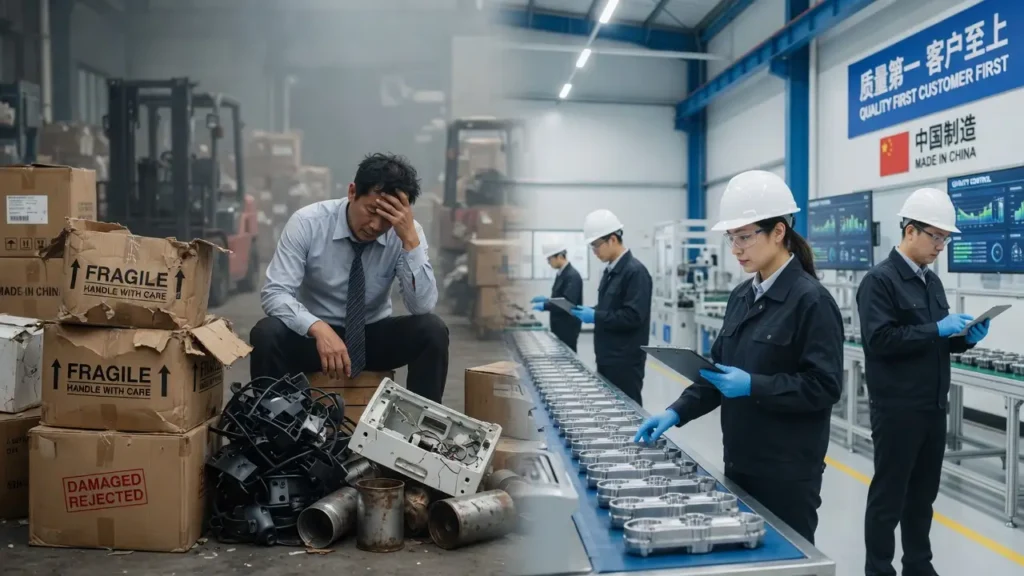
A professional China sourcing agency may save you a lot of time and money. They can help you find eligible manufacturers, negotiate prices, perform factory audits, manage quality inspections, and coordinate logistics. But an untrained (or dishonest) agent can also cause costly delays, quality concerns, and communication problems throughout your supply chain.
Hi, this is Yingying, founder of Yinhan Sourcing from Shenzhen, China. In the past few years, our staff has helped over 3,000 international buyers acquire products from China in areas such as consumer electronics, furniture, home goods, fashion, pet products, and private-label manufacturing.
Verification is more crucial than ever in today’s sourcing environment. Fake websites, cloned factory photographs, AI-generated photographs and videos, deceptive testimonials, and hidden commission schemes are making it harder and harder for overseas customers to tell the difference between real sourcing organizations and dodgy intermediaries.
Hence, this tutorial was produced.
You’ll find a comprehensive 12-point checklist that seasoned importers use to check out sourcing agents before they sign contracts and transfer deposits, rather than relying on guesswork or online reviews.
By the end of this guide, you’ll know:
- How to confirm whether a sourcing company is legally registered
- Which documents you should always request
- What questions reveal an agent’s real experience
- The warning signs that often indicate future problems
- How to verify a sourcing agent without traveling to China
- The safest way to begin working with a new sourcing partner
Whether you’re importing for the first time or looking to replace an existing sourcing agent, this checklist will help you make a more informed and confident decision.
Global sourcing has evolved a lot during the past few years.
China is still a major industrial center in the world, but overseas customers are in a more complicated sourcing situation. Digital marketplaces have made it easier than ever to interact with suppliers and sourcing companies – but they’ve also made it easier for fraudulent businesses to appear real.
Now you can build professional websites in hours. Photos of the factory are normally taken from other companies. Some agencies claim years of expertise, even though they have only recently formed. Other agencies do not even have a formal business registration or a real presence.
Buyers abroad who can’t easily travel to China can find it difficult to differentiate a real sourcing partner from a questionable one.
This is way more than “getting scammed” fallout.
A bad sourcing agent can impact every step of your supply chain:
- Working with manufacturers who don’t have the ability to meet your specs.
- Defective or inconsistent products due to poor quality control.
- Delays leading to missed product launches or stock-outs.
- Hidden supplier commissions or other undisclosed expenses that boost your total sourcing costs.
- Communication problems that cause manufacturing blunders and expensive reworks.
We have also encountered cases when the buyer selects the cheapest sourcing service available, only to find that the “agent” never really went to the plant, but instead just forwarded emails between the customer and supplier. Without control on the ground, quality problems didn’t show up until items appeared overseas.
Verification doesn’t mean eliminating all potential risks—there’s always some level of uncertainty with overseas sourcing. Rather, it’s about minimizing hazards that can be prevented before they become costly problems.
View verification as an investment, not an administrative burden.
A day of analyzing documentation, asking the proper questions, and confirming the competence of an agent can prevent weeks of production delays and thousands of dollars in needless costs.
It’s not about finding a sourcing agent who promises perfection. It is to locate someone truthful, experienced, and able to handle problems in a professional manner when they occur.
5-Step Verification Process
Before you go deep into detailed checks, you need a simple framework. Most importers fail because they jump straight into negotiations without basic verification.
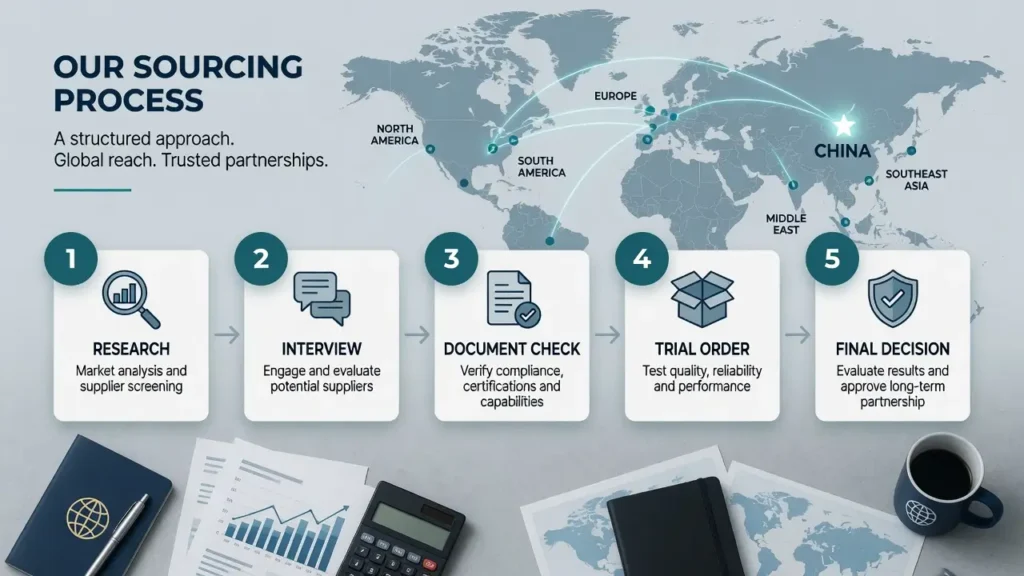
Use this 5-step process in order:
1. Research the Company
Start with basic online validation:
- Check Google search results
- Look for company website consistency
- Compare domain age (older is better, but not always required)
- Check if content is original or copied
- Look for real team photos (not stock images)
Goal: confirm the company actually exists and is active.
2. Initial Contact & Interview
Before sharing any order details, test how they communicate.
Pay attention to:
- Response speed
- Clarity of answers
- Willingness to explain process
- Whether they avoid direct questions
Ask simple but revealing questions:
- “How do you select suppliers?”
- “Do you visit factories yourself?”
- “Can you share sample inspection reports?”
Goal: understand professionalism and transparency.
3. Background Check
Now go deeper:
- Ask for business license
- Request company registration details
- Verify physical office address (Google Maps + video call)
- Check LinkedIn profiles of team members
Goal: confirm legal and operational legitimacy.
4. Test Order (Critical Step)
Never start with a large order.
Instead:
- Place a small trial order
- Monitor communication during production
- Request inspection reports
- Track shipping process
Goal: evaluate real execution, not promises.
5. Final Evaluation Before Scaling
After the test order:
Ask yourself:
- Was communication consistent?
- Were timelines realistic?
- Did quality match expectations?
- Were issues handled professionally?
Only after this should you scale order size.
The 12-Point Verification Checklist
Now we move into the core section. This is where you actually evaluate a China sourcing agent.
1. Verify the Business License
Every legitimate sourcing agent in China should have a registered business license.
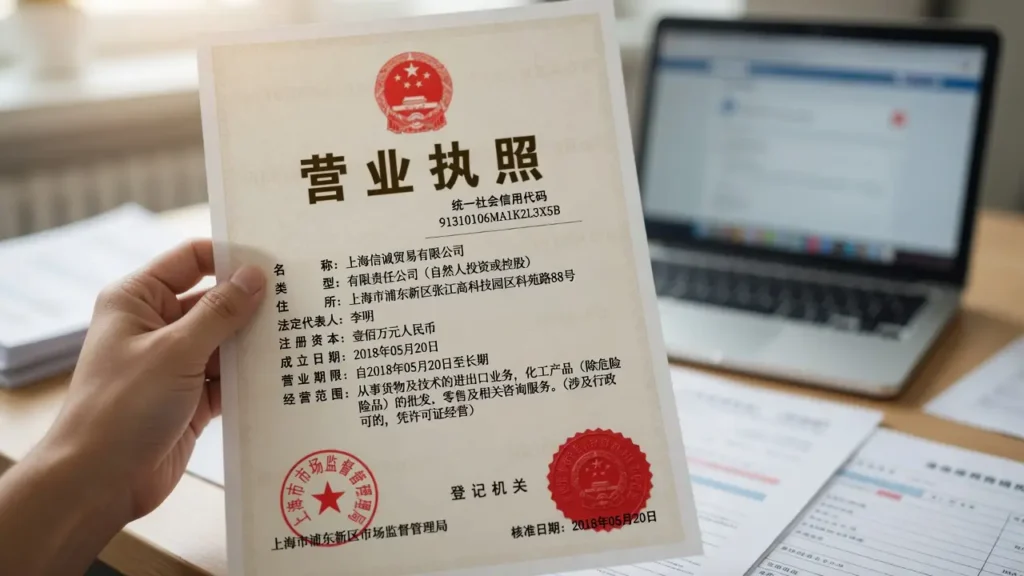
What to check:
- The company name matches invoices and contracts
- The registration number is valid
- Business scope includes sourcing and trading services
How to verify:
Ask for the license, and confirm details match all documents.
Red flag: refusal or blurred document.
2. Check Company History
Experience matters more than promises.
Look for:
- Years in operation
- Past client projects
- Industry specialization
A real sourcing agent can explain the following:
- What products they have sourced
- Which countries they work with
- Examples of completed orders
Red flag: vague answers like “many years of experience” without proof.
3. Confirm Physical Office Location
A real sourcing company has a real presence.
Verify:
- Office address on Google Maps
- Live video call showing workspace
- Staff presence (not empty coworking space claims)
Yinhan Pro Tip: Ask for a live walk-through during a video call.
4. Evaluate Product Expertise
Not all sourcing agents are the same.
Some specialize in:
- Electronics
- Furniture
- Apparel
- Home goods
A strong agent should understand:
- Manufacturing process
- Material differences
- Supplier strengths in that category
Red flag: claiming they can “source everything equally well.”
5. Review Supplier Verification Process
A sourcing agent is only as good as their suppliers.
Ask:
- How do you find suppliers?
- Do you visit factories?
- How do you evaluate quality capability?
A professional agent should have a structured supplier screening process.
6. Examine Quality Control Capability
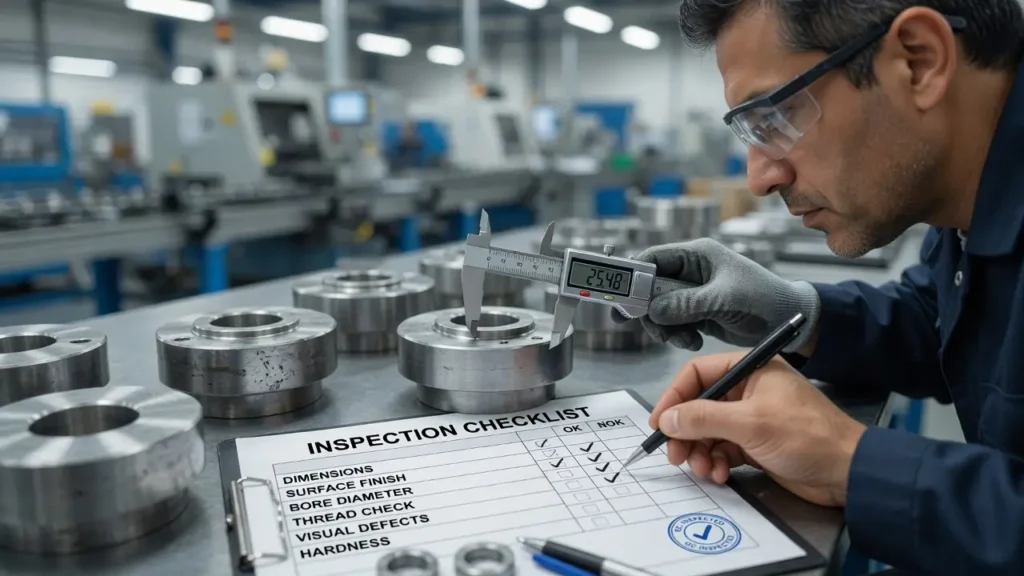
Quality control is one of the most important roles of a sourcing agent.
Check if they provide:
- Pre-production inspections
- During-production checks
- Pre-shipment inspections
- Photo/video inspection reports
Red flag: no documented QC process or only verbal updates.
7. Understand Pricing Structure
A trustworthy sourcing agent is always transparent about how they earn money.
Common models:
- Fixed service fee
- Commission per order
- Hybrid model (fee + commission)
What you must check:
- Is pricing clearly explained?
- Are there hidden supplier commissions?
- Do they mark up factory prices without disclosure?
Good sign: clear breakdown of every cost.
Red flag: “We will explain later” or unclear pricing.
8. Request Customer References
A real sourcing agent should have real clients.
Ask for:
- Recent client examples
- Case studies
- Past order summaries
- (If possible) direct client contact
What to look for:
- Specific product details
- Real order results
- Measurable outcomes (cost savings, defect reduction)
Red flag: only generic testimonials with no details.
9. Assess Communication Quality
Communication is one of the biggest hidden risks in sourcing.
Evaluate:
- Response speed
- Clarity of explanations
- Ability to answer technical questions
- Consistency across conversations
A strong agent:
- Explains clearly in simple English
- Proactively updates you
- Asks clarification questions
Red flag: vague replies or inconsistent answers.
10. Evaluate Logistics Knowledge
Even if they don’t ship directly, they must understand the process.
Check knowledge of:
- Incoterms (EXW, FOB, CIF)
- Shipping methods (air, sea, express)
- Customs requirements
- Packaging standards
Good sign: can explain trade-offs between shipping options.
Red flag: relies entirely on third parties without understanding basics.
11. Start With a Trial Order
Never skip this step.
A trial order helps you test the following:
- Supplier selection quality
- Production management
- Communication reliability
- Quality control system
Best practice:
- Start small
- One product category
- Clear specifications
- Document everything
Red flag: refusal to accept small trial orders.
12. Sign a Clear Sourcing Agreement
Before scaling, always sign a written agreement.
It should include:
- Scope of services
- Pricing structure
- Quality standards
- Payment terms
- Responsibility breakdown
- Dispute resolution
Good sign: detailed, structured contract.
Red flag: verbal agreement only.
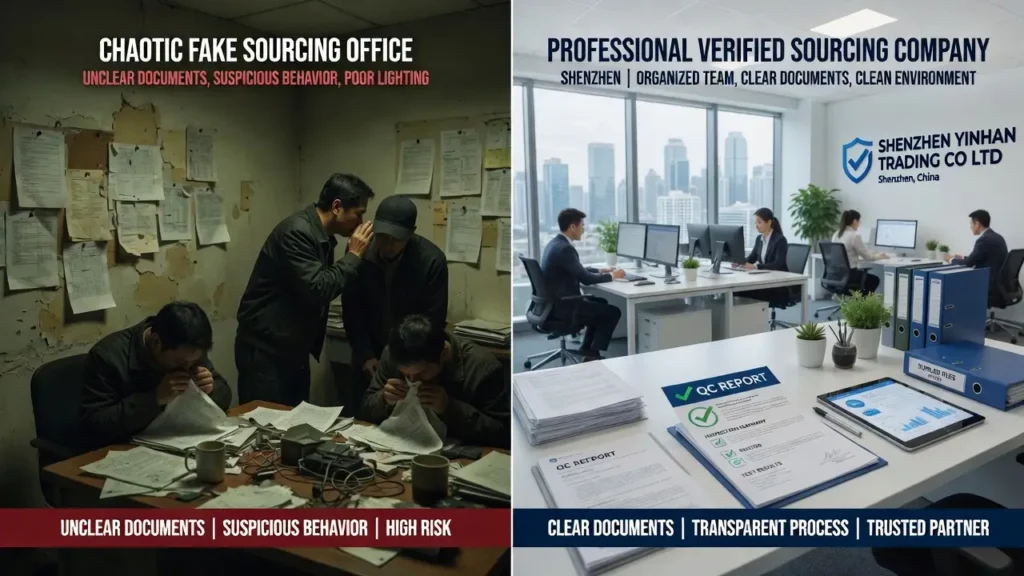
Red Flags vs Green Flags
| Red Flag | Green Flag |
|---|---|
| No business license | Registered company provided |
| Refuses video call | Willing to show office live |
| Hidden pricing | Transparent fee structure |
| No QC reports | Detailed inspection reports |
| No references | Verified client cases |
| Poor communication | Clear, structured updates |
| Pushes large orders early | Encourages trial order |
How Yinhan Meets This Checklist
At Yinhan Sourcing in Shenzhen, we apply every step of this verification framework ourselves.
- Registered business with physical office in Shenzhen
- Structured supplier screening process
- Factory visits and inspections before production approval
- Transparent pricing with no hidden commissions
- QC reports with photos and videos for every shipment
- Trial orders encouraged before scaling production
- Direct communication with dedicated account managers
We encourage every client to verify us using the same checklist in this article before starting cooperation.
Frequently Asked Questions:
Can I verify a sourcing agent remotely?
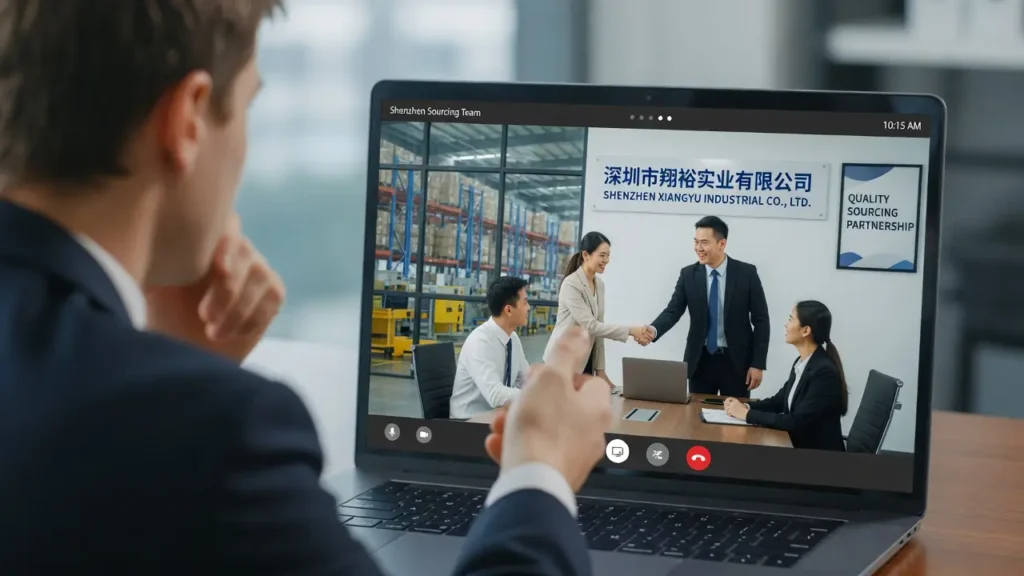
Yes. Most verification can be done through:
- Video calls
- Document review
- Sample orders
- Reference checks
How long does verification take?
Typically 2–7 days depending on how quickly the agent provides documents and references.
What is the safest way to start working with a new agent?
Start with a small trial order before committing to large production volumes.
Are sourcing agents necessary if I use Alibaba?
Not always, but agents reduce risk by handling supplier verification, quality control, and logistics coordination.
Choosing a China sourcing agent is not just about price—it is about risk control. A few hours spent verifying your partner can prevent costly mistakes, production delays, and quality issues later.
Use this 12-point checklist before signing any agreement or sending any payment.
If the agent passes these checks, you can proceed with confidence. If not, move on.
Want us to verify your sourcing agent for you?
We offer a FREE 15-minute China sourcing agent risk check.
We will review:
- company legitimacy
- pricing structure
- supplier risk level
- red flags in communication
- whether they are safe to proceed with
Click here to request your free check